Mold guide
How Fast Mold Can Grow After Water Damage
Get practical guidance on how quickly mold risk rises after water damage, what to do first, and when to move to inspection or cleanup support.
Mold can start becoming a concern quickly after water damage when drywall, trim, cabinets, flooring, insulation, or personal contents stay damp. In Orlando, the timeline can feel even tighter because warm weather, storm cycles, slab moisture, high indoor humidity, and air conditioning problems often slow the drying process. The practical answer is not to wait until visible growth is obvious. If materials were wet, the first job is source control, drying, documentation, and a clear decision about whether a mold inspection or remediation scope is needed.
A small, clean water event that is stopped early and dried thoroughly may not turn into a remediation job. A leak that sat overnight behind baseboards, a roof drip that reached insulation, a supply line that soaked cabinets, or a storm event that left rooms humid for days is different. Mold remediation companies look at the material, moisture history, surface condition, room humidity, odor, and whether the source is fixed before recommending next steps.
This Orlando guide is written for homeowners, landlords, property managers, and business owners who need to make a calm decision after water damage. Use it to understand the first 24 to 72 hours, the local humidity factors that matter, what to photograph, what not to disturb, and when to call for professional mold inspection or mold remediation in Orlando.
The short answer for this query
Mold risk can appear quickly when water remains in place, but timing varies by material, warmth, airflow, and humidity control. The practical rule is simple: if wet materials are still present, treat it as an active mold-risk condition and manage it as water remediation with mold-aware cleanup. That means fixing the source and drying the structure and contents before covering or repairing surfaces.
Why first-day action matters
EPA guidance prioritizes source correction and complete drying, not cosmetic cleanup. In the first hours, focus on stopping the leak, removing standing water, and creating airflow and dehumidification conditions that reduce ongoing wetness. In Central Florida homes, this first stage often determines whether the repair stays a cleanup task or becomes a broader remediation scope.
Drying-only, monitoring, or inspection?
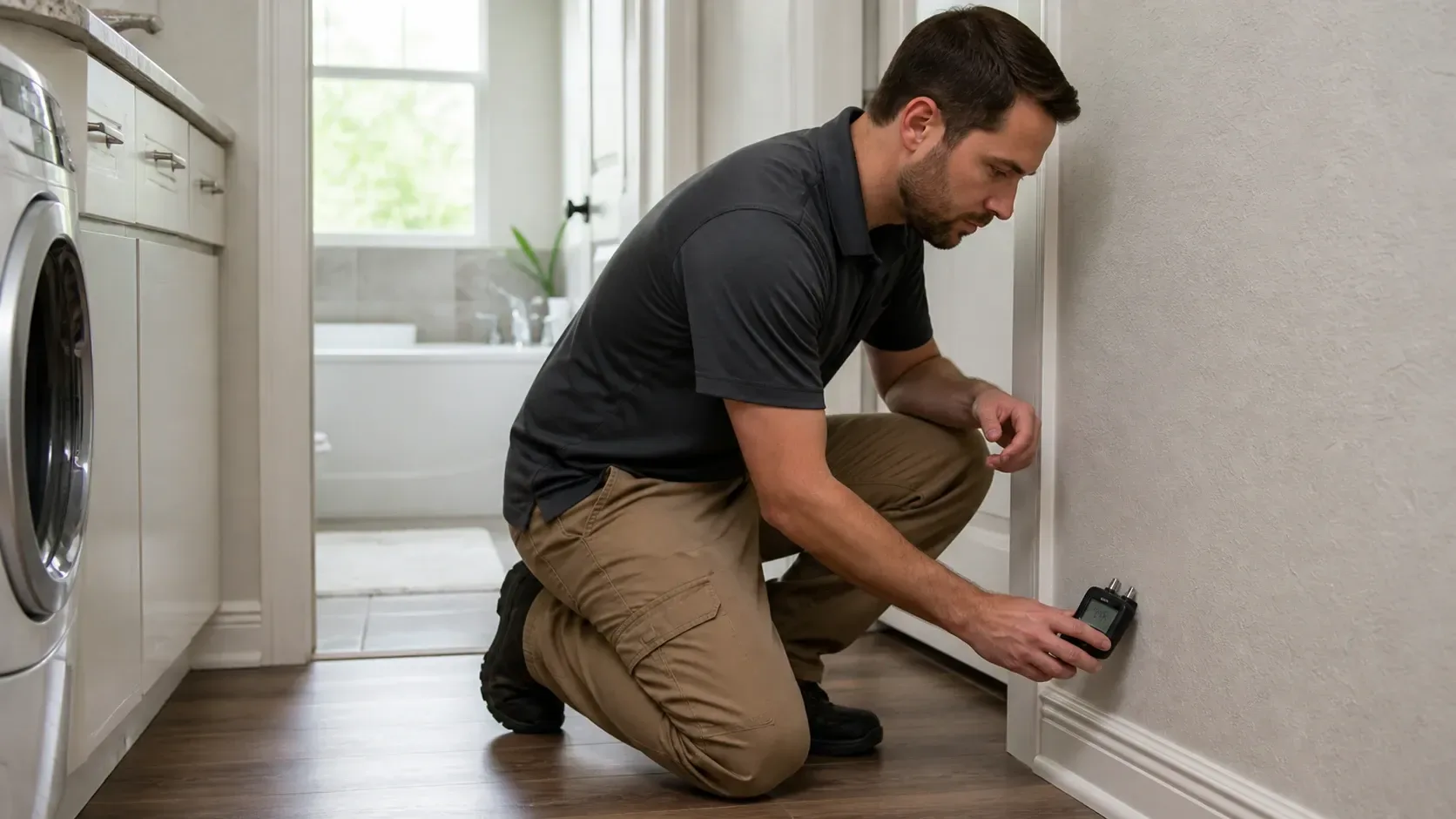
Use this practical sequence: Step 1—control the water source and keep affected materials protected from further damage. Step 2—document moisture readings, odors, and material condition daily for 24 to 72 hours. Step 3—if porous materials remain damp, odor returns when closed up, or staining spreads, request an inspection before repainting, caulking, or closing assemblies. The question is not whether you are scared of mold; it is whether drying evidence supports closure.
What changes when full cleanup moves into remediation territory
EPA distinguishes routine cleanup actions from broader mold cleanup responses, especially when flood-type or prolonged moisture exposure is involved. A stronger response is usually needed when the issue is material saturation in wood, drywall, insulation, fabric-backed flooring, or built-in assemblies that stay wet, and when repair without removal risks trapping moisture. Scope is based on what is actually wet and where it is wet, not on generic assumptions.
Quick handoff criteria you can use before a call
Call for inspection or remediation support when any of the following are true: source is uncertain, water may have sat for more than a day, porous materials were involved, musty odor persists, swelling/softening is present, or the affected area is a rental/commercial space that needs reliable documentation for next occupants. Include city, room, source, timing, photos, and whether the property is occupied when you contact the team.
What not to do before professional review
Avoid cleaning over wet surfaces, scrubbing unknown staining with harsh chemicals, cutting into closed wall areas, or applying paint/patches before conditions are verified. Those steps can hide evidence that helps define the right scope and may add delay later. Ask for inspection guidance first, then plan any cleanup sequence based on moisture findings and material condition.
Sources and practical guidance
Cleanup decisions depend on the size and cause of the moisture problem; water problems should be fixed and materials dried completely. Refer health concerns to a health professional.
Moisture control is central to mold control, and cleanup should address both visible growth and the underlying water source.
EPA provides separate guidance for general cleanup and cleanup after flooding; the page should distinguish inspection, cleanup scope, and moisture correction.